
Developmental Learning
Building Skills in Play
ZiggleZoo offers play-based learning for speech & language, sensory & motor, social & creative, and regulation & health skills. Learn more about each developmental area and how ZiggleZoo supports children's growth.
Speech & Language
- Early speech sound production of animal noises & sound effects
-
Early syllable structures:
- 1 syllable: dog, cat, fish, frog, mouse, horse, snake, sloth, bird, seal, bee, pig, bear, chick
- 2 syllables: bunny, starfish, lion, monkey, penguin, cheetah, lizard, spider, giraffe, owl
- 3-4 syllables: flamingo, gorilla, elephant, alligator, octopus, kangaroo
- Vocabulary of concepts (animals, body parts, colors, counting), actions (run, jump, wiggle), & opposites (move in contrasting sets of fast/slow, big/small, quiet/loud)
-
Sorting by color and animal habitats
- Farm: horse, pig, chick
- Zoo: monkey, gorilla, lion, flamingo, penguin, cheetah, elephant, giraffe, sloth, kangaroo
- Water: frog, starfish, lizard, octopus, seal, alligator, fish
- House Pets: dog, cat, bird
- Forest: mouse, bunny, owl, bear
- Garden: bee, spider, snake
- Early sentences: dog shake, green frog, fast cheetah
- Definitions & descriptions using categories with salient features
Sensory & Motor Skills
- Balance: Complete actions using the whole body before acting out movements using first one side and then the other. Hold positions to improve balance.
- Coordination & movement sequencing: Complete movements in a variety of 2-5+ animal sequences (cat/bear/horse; frog/giraffe/bunny) to develop complex motor planning.
- Physical awareness and control through the use of targeted movements and/or whole-body movements
-
Sensory processing:
- Visual system - bright colors and clear images keep learners engaged
- Auditory system - pairing movements with animal noises, language models, and/or verbal directions improves sound detection and interpretation
- Vestibular system - processes motion, head position, and spatial orientation to maintain balance and posture
- Proprioceptive system - sense body position, movement, and acceleration in space
- Interoception: awareness of internal sensations like heart rate, hunger, and breath
- Muscle strengthening through repeated movements and sequences over time
Social Skills & Creativity
- Social awareness, self-awareness, and confidence through intentional movement
- Imitation of spoken language (sounds, labels, actions, sentences) and movements (gross motor, fine motor, & motor planning)
- Opportunities for introducing, teaching, and practicing turn-taking routines
- Social referencing while visually and/or verbally checking in with others while playing
- Role play & pretend sequences: Pretend to be different animals encountering each other and deciding how to interact (Will the bear chase the frog or make a new friend?)
- Social enjoyment & collaboration with peers and/or adults
- Individualize each child’s tolerance for losing games by choosing Ways to Play that focus on cooperative play, competitive play, or both!
- Social flexibility with multiple activities and Ways to Play! Make up your own games or rules, too!
- Playdate fun! Use ZiggleZoo to break the ice and utilize time when playing with friends.
Regulation & Health
- Indoor active entertainment at home, school, or travel
- Short movement breaks improve attention & focus
- Longer play provides physical exercise and/or social fun
-
Regulate (Rev Up & Calm Down symbols on cards):
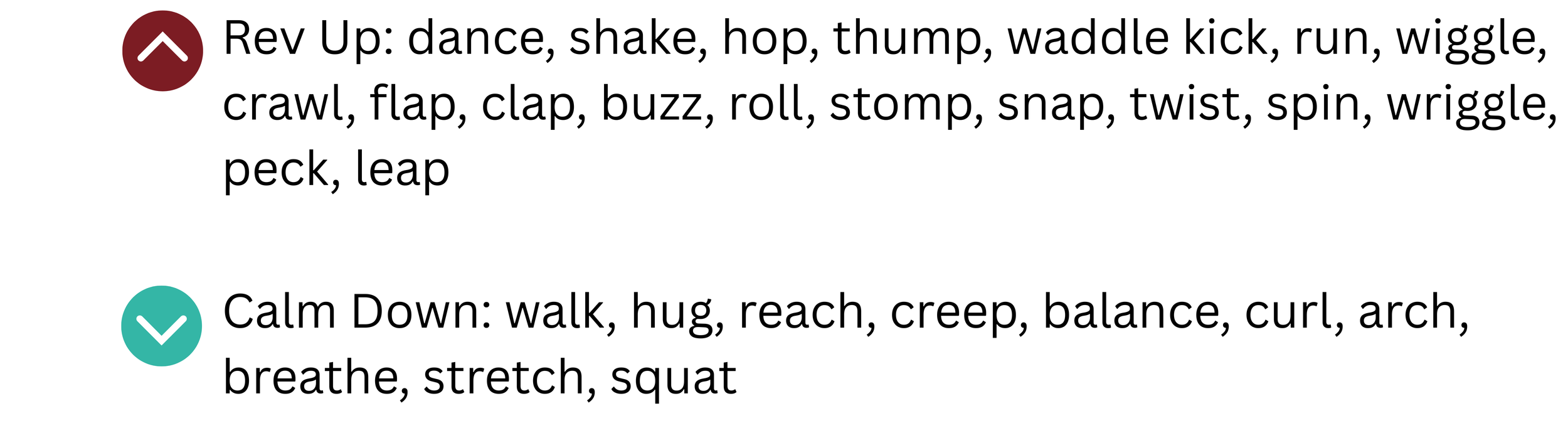
- Proactively set children up for regulation by building 5-10 minutes of ZiggleZoo into daily lifestyle routines. Consider ZiggleZoo in the morning to get the day started right and/or after school to reset for a successful evening.
- While holding static poses (squat, balance, curl, etc.), take 5-6 slow, deep breaths to focus on body awareness, reduce overwhelm (anger, excitement, anxiety), and build emotional resiliency.